
Your deck has been through a Mobile summer, and if you are looking at faded, graying boards, now is a good time to give it the attention it has been quietly asking for. Knowing how to stain a deck the right way is the difference between a finish that holds for 4 or 5 years and one that peels before the season is out. On the Gulf Coast, that difference matters more than it does in most places.
Key Takeaways
- Prep, cleaning, inspecting, and drying, decides whether the stain actually lasts.
- The right stain type depends on how much grain you want visible and how much upkeep you will do.
- Mobile’s humidity, heat, and UV make timing and product choice extra important.
- Applying stain to wet or dirty wood is the most common reason a finish fails early.
- For rot, peeling old stain, or an older deck, a professional is worth the call.
Why Decks in Mobile and Baldwin County Take Such a Hard Hit
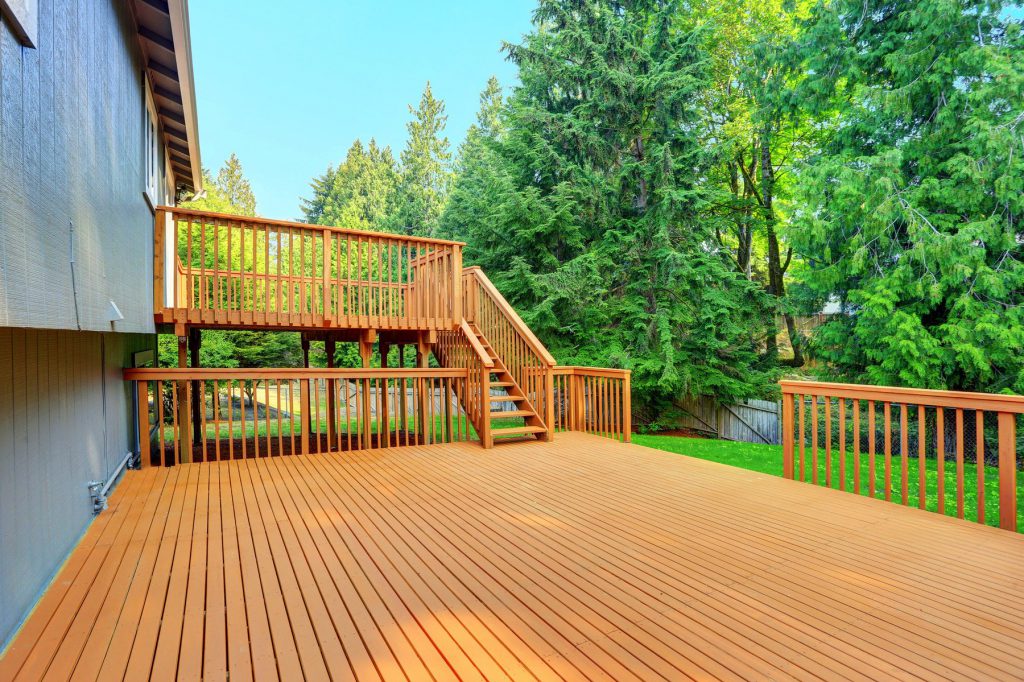
Decks here face conditions that homeowners up north do not. Relentless summer sun, high humidity, and salt air are brutal on wood: UV bleaches and breaks down the fibers, moisture works into the grain and causes swelling, cracking, and rot, and mold and mildew thrive year-round.
Even new treated pine will eventually gray, crack, warp, and twist, which makes protecting it more important here than almost anywhere. A quality stain forms a barrier against all of that, keeps the surface from splintering, and adds years to the deck’s life.
How to Tell If Your Deck Is Ready for a New Coat
Before you open a can, run a quick water test. Sprinkle water on the boards: if it soaks in right away, the deck is ready; if it beads or stands on the surface, the wood will not accept stain yet.
You can also read the visible signs: boards gone silver or gray, stain that is flaking or peeling, and areas that feel rough underfoot. Any of these means it is time to look at refinishing.
Picking the Right Stain Before You Start
Choosing the wrong product for your goals or for the Alabama climate is a setup for early failure, so the right product is half of how to stain a deck so it lasts.
Transparent stains show the full grain and look great on newer wood, but give the least protection and usually need recoating yearly. Semi-transparent stains add color while keeping grain visible and generally hold 4 to 5 years here, which makes them the most popular deck choice. Solid stains cover the grain for maximum protection, though once they start peeling, restaining is more involved.
For coastal Alabama, look for a stain with built-in mildewcide and UV blockers, since those two features drive how long the finish lasts. Our guide to the best stain for cedar fence covers what to look for in products rated for Gulf Coast conditions.
Oil-based stains penetrate deeper and last longer, while water-based formulas dry faster and clean up easier, and modern water-based alkyds resist mildew and fading well in this climate. For more on the trade-offs, see oil versus latex exterior paint.
How to Stain a Deck: Step-by-Step
With the deck dry and the right product picked, here is the process from start to finish.
Step 1: Clear the Deck and Inspect Every Board
Remove all furniture, grills, and planters, then walk every board. Wood rots where moisture sits, and older decks can hide extensive rot, which will not hold stain and will not last, so replace bad boards first.
Sand splintered spots with 80-grit, and drive in or replace any nails that have worked loose with deck screws. These small repairs show in the final result.
One caution: decks built before 2004 may use chromated copper arsenate (CCA), an arsenic-based preservative, and sanding that wood releases arsenic-laden dust, so a professional should handle it. The EPA’s guidance on CCA-treated wood notes that a regular penetrating stain can reduce leaching from older boards.
Step 2: Clean the Wood Thoroughly
This is the most important step. The surface must be free of mildew, dirt, debris, and old residue, because stain on a dirty or damp surface will not bond and will crack or peel.
Apply a deck cleaner with a pump sprayer or stiff brush, work it in, let it sit about 15 minutes, then rinse. A pressure washer works like liquid sanding, opening the grain so stain penetrates evenly, but keep the pressure moderate so you do not gouge the fibers.
Step 3: Let the Wood Dry Completely and Watch the Weather
This is where a lot of DIY projects go sideways. Even slightly wet wood will not hold stain, so be patient.
Plan for at least 24 to 48 hours of dry time, longer in high humidity, then run the water test again before you start. Stain when it has not rained for 3 days and the forecast shows 2 dry days, with temperatures between 50°F and 90°F and low humidity.
Heat is the enemy: once it climbs past 90°F, stain dries before it can penetrate, leaving marks and uneven coverage. Work early morning or late afternoon out of direct sun, and in this area late spring and early fall are the most reliable windows.
Step 4: Apply the Stain
For a larger deck, mix all the cans into one bucket first so any color differences blend before they hit the wood. Start with railings, posts, and balusters, brushing top to bottom so drips fall on unstained surfaces, then move to the boards.
A paint pad or pole roller covers the flat boards faster than a brush and more evenly than a sprayer. Whatever you use, back-brush while the stain is wet, since the friction works it into the pores and the wood absorbs more.
More stain is not better. Over-applying leaves a sticky film that cracks or peels when moisture hits it.
Step 5: Let It Cure Before Using the Deck
Drying and curing are not the same. A stain can feel dry in a day but take several days, sometimes weeks, to fully cure and protect.
Plan for at least 24 hours before any foot traffic and 48 hours before dragging furniture, grills, or a firepit back across the surface.
Common Mistakes That Lead to Early Stain Failure
Even when you know how to stain a deck, a few missteps can cost a full season of protection.
- Staining wet wood: if it has not fully dried after cleaning, the stain will not bond and fails fast.
- Applying in midday sun: the hot surface flashes off the solvent, the pigment does not penetrate, and peeling starts within a year.
- Over-applying: a thick coat looks like more coverage but performs worse and dries far slower.
- Skipping prep: staining over mold, dirt, or peeling finish means the new coat fails just as fast.
- Wrong product for the climate: no mildewcide or UV blockers means it will not survive a Gulf Coast summer.
Doing It Yourself vs. Hiring a Professional
For a deck in good shape with no major repairs, staining it yourself is a manageable weekend project, as long as you are patient with prep and careful with timing. Part of knowing how to stain a deck is knowing when to hand it off.
A professional makes more sense when there is significant rot, extensive peeling old stain, boards to replace, or any question about older treated lumber, because fixing a failed DIY job usually costs more than hiring out. A professional team also finishes faster, brings products rated for Gulf Coast conditions, and stands behind the work.
Ed Wade Painting has worked across Baldwin and Mobile counties since 2011, with a 5-year workmanship warranty on most jobs. See our professional deck staining services, and for budgeting, what affects exterior painting cost.
How Often to Restain a Deck
Most decks here need a fresh coat every 2 to 4 years, depending on stain type and exposure. A simple rule: if the stain still beads water, it is still doing its job.
On the coast, UV and salt air shorten that window compared to inland. Staying on schedule keeps each job simpler, since light maintenance always beats a full strip and restoration.
Talk to Ed Wade Painting About Your Deck
If you would rather hand the project off and get a result that holds up, Ed Wade Painting handles deck staining and wood prep across Mobile, Baldwin County, and the surrounding Gulf Coast. The team has done this work since 2011, knows what the climate demands, and backs every job with a 5-year workmanship warranty.
Call 251-336-6477 for a FREE estimate today.