
Paint ceiling or walls first? If the ceiling, walls, and trim are all part of a Daphne interior repaint, start with the ceiling, move to the walls, and finish with the trim. The bigger decision is knowing when that full sequence applies and when one of those surfaces should be left alone.
That scope-first approach helps you avoid repainting areas that do not need work. It also keeps each finished surface protected while the rest of the room is completed.
Start With the Scope Before You Start With the Ceiling
The full-room sequence only makes sense when the ceiling, walls, and trim are all included. If the ceiling still looks good and only the wall color is changing, protect the ceiling and leave it in place.
The same idea applies to trim-only work or a single accent wall. A smaller scope should stay smaller instead of turning into an unnecessary full-room repaint.
This first decision keeps the project focused on the surfaces that actually need attention.
When Every Surface Is Included, Work From the Top Down
For a complete repaint, Sherwin-Williams recommends ceilings first, walls second, and woodwork last. That order limits the effect of drips, splatter, and occasional spills on surfaces that are already complete.
Sherwin-Williams’ interior painting order provides a useful baseline for a full Daphne room.
It is a starting point, not a reason to paint a ceiling that is outside the project scope.
Complete the Messy Work Before the Finish Sequence
Drywall patches, nail holes, cracks, loose caulk, sanding, and cleaning should be handled before the ceiling receives its final coats.
Ed Wade Painting’s current interior service includes cleaning, prep sanding, drywall repairs, protection around trim, and related surface preparation before finish application.
If primer is needed for bare drywall, repaired areas, stains, or another surface condition, apply it before the final coating stages.
Why the Ceiling Belongs Before the Wall Color
Overhead work can create small amounts of roller spatter and edge overlap even when the painter is careful. Starting with the ceiling keeps those marks on walls that have not received their final finish yet.
When the walls come next, the wall color can cover minor ceiling overlap at the upper edge. The final wall cut then creates the visible line beneath the ceiling.
Reversing the order means the same ceiling spatter can become a wall touch-up problem.
Wall Paint Comes Next Because It Creates the Final Room Color
After the ceiling reaches the required dry or recoat stage, the walls can be cut in and rolled. The exact timing should come from the coating label instead of a universal waiting period.
Wall paint should be chosen for the room’s appearance, use, and cleaning needs. There is no single sheen that belongs in every living room, bedroom, kitchen, or hallway.
If you are comparing coating types, our guide to ceiling paint and wall paint explains why the two surfaces may call for different products.
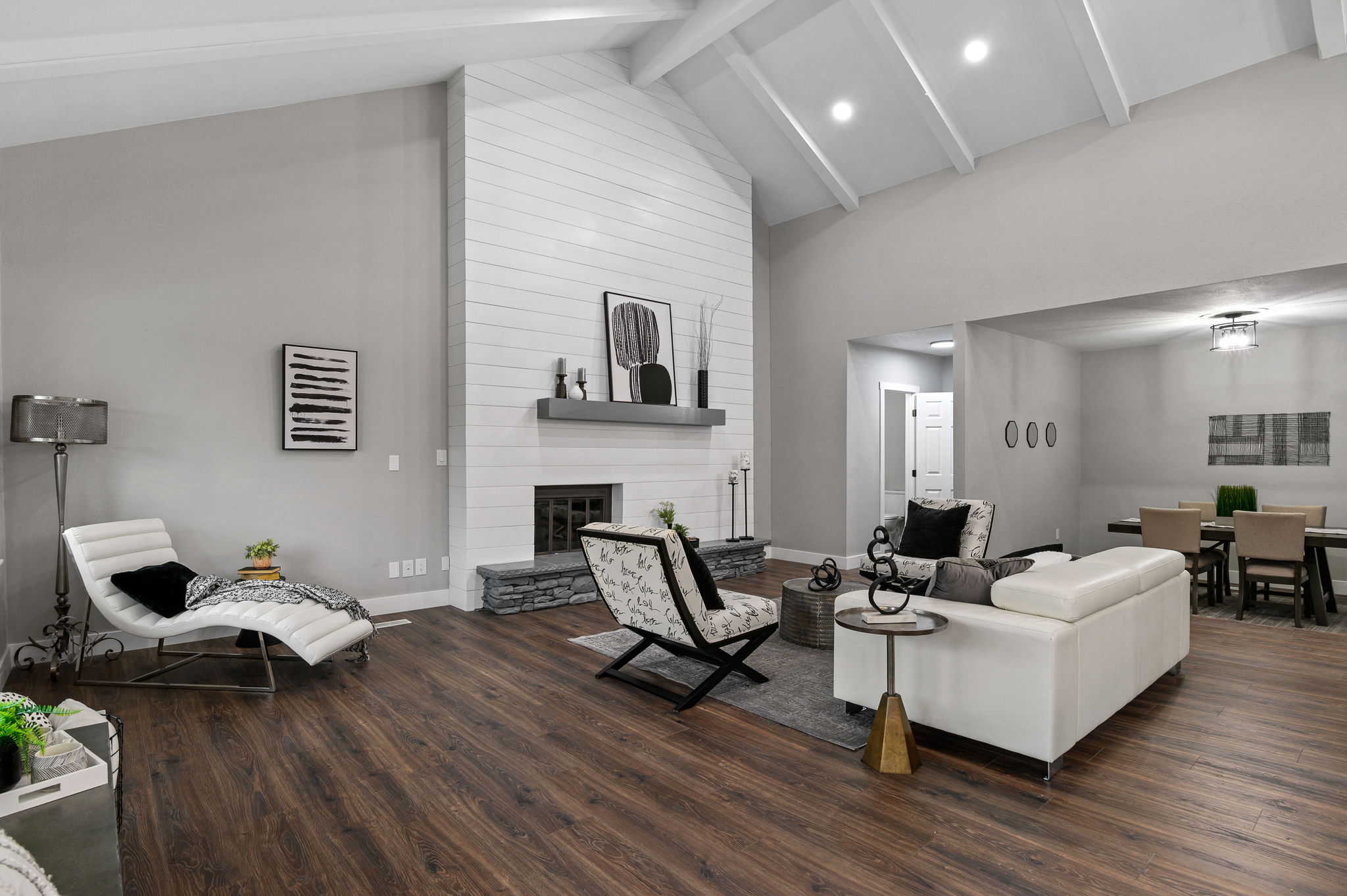
Trim Finishes the Room After the Large Surfaces Are Done
In the standard sequence, trim comes after the ceiling and walls. That keeps wall roller spatter away from the final baseboard, casing, and door finish.
It also lets the painter finish the smaller detail lines after the larger surfaces are complete.
If a project uses a different trim sequence, ask how the finished trim will be protected while the wall stage is completed.
Three Situations Where the Full Order Changes
Wall-only refresh: Leave a ceiling that is still in good condition alone and protect the top edge while the wall color changes.
New trim: The installation and finishing sequence may change if baseboards, casings, or other woodwork are being replaced instead of simply repainted.
Ceiling and walls in the same color: Using one color can make the transition less visually demanding, but ceiling-first work still helps keep overhead application ahead of the wall finish.
What to Ask a Painter About the Room Sequence
Ask which surfaces are included, what preparation happens first, where primer is being used, and what order the finish coats will follow.
You should also know how furniture and floors will be protected and how the team decides that one stage is ready for the next.
Those answers make it easier to compare painting proposals based on the process, not just the price.
How Ed Wade Painting Handles Daphne Interiors
Ed Wade Painting serves Daphne and other Gulf Coast Alabama communities with residential interior painting for walls, ceilings, trim, doors, cabinets, and related surfaces.
The company was founded in 2011 and currently reports about 50 years of combined team experience. Ed Wade Painting is licensed and insured, offers free estimates, provides virtual and phone estimate options, screens its painters, communicates daily, protects furniture and carpets, and completes cleanup after the project.
Current warranty information confirms a 5-year warranty for exterior painting. Warranty terms for interior work should be confirmed during the estimate rather than assumed from the exterior policy.
For more about the service, see our interior house painting services.
Frequently Asked Questions
Should I paint the ceiling or walls first?
For a full-room repaint, start with the ceiling and move to the walls after the ceiling reaches the required dry or recoat stage.
Should trim come after the walls?
Trim comes last in the standard Sherwin-Williams room sequence. A different order can still work when the project method and surface protection are planned around it.
Do I need to repaint a ceiling that still looks good?
No. If the ceiling is outside the project scope and still in good condition, protect it and complete only the surfaces that need repainting.
How long should I wait before moving from the ceiling to the walls?
Use the dry and recoat instructions for the exact ceiling coating. Product, temperature, humidity, and application conditions can affect the stated timing.