Ask 10 painters which exterior paint is better and you will get 10 different answers. Most of them are right for somewhere. The problem is that “somewhere” is rarely the Gulf Coast.
Homes in Foley, Daphne, Orange Beach, and the surrounding area face a set of conditions that genuinely change how exterior paint performs. Salt air off the water, heat that builds for months, and humidity that never fully lets go in summer are not just weather inconveniences. They are active forces working on your home’s exterior every single day.
The oil vs latex exterior paint decision is not just a product preference here. It is a choice that determines how long your finish holds, how much prep your next repaint requires, and whether the money you spend now works for you or against you within a few years.
Quick Takeaways:
The Chemistry behind the Choice
Before getting into which paint works better on your Gulf Coast home, it helps to understand what actually makes them different at a basic level.
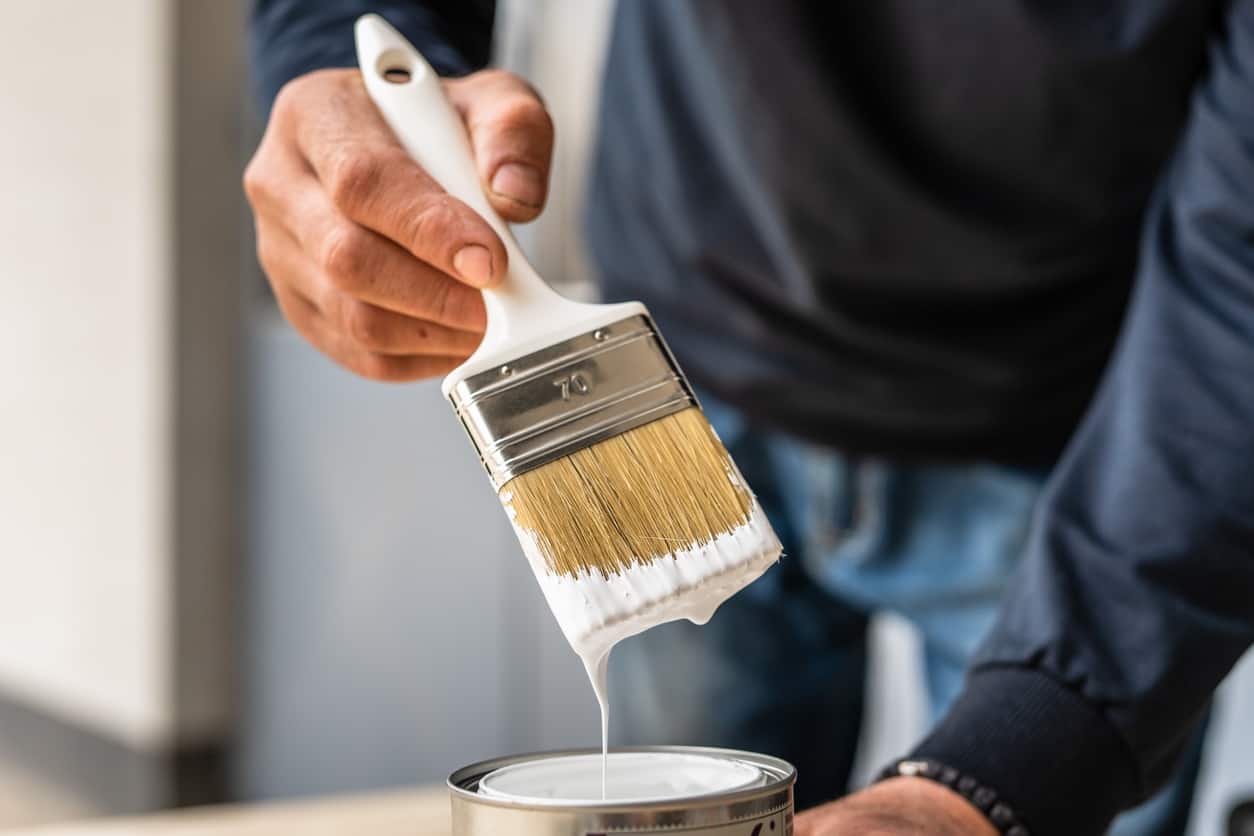
Oil-based exterior paint uses an alkyd resin binder. As the paint is applied, it does not simply dry. It goes through an oxidation process where the resin reacts with oxygen and gradually hardens into a film. That process takes time, which is why oil-based products have long recoat windows.
Latex exterior paint, also called acrylic or water-based paint, works differently. Water carries the acrylic polymers onto the surface. As the water evaporates, those polymers bind together and form the paint film. The process is faster and the resulting film has different physical properties than an oil-based one.
Those physical properties are what drive every practical difference you will notice on your home.
Oil vs Latex Exterior Paint: How Gulf Coast Conditions Separate Them
The same conditions that make the Gulf Coast a great place to live are hard on exterior paint. Salt air, sustained humidity, intense UV from May through October, and the temperature and moisture swings that come with hurricane season all put paint under stress that inland markets simply do not deal with at the same level.
Flexibility under Coastal Heat and Moisture
Wood siding, trim boards, and other organic materials expand when they absorb moisture and contract as they dry out. In a coastal climate, that cycle is constant and pronounced.
Latex paint retains flexibility after curing. When the surface underneath shifts, the paint film moves with it rather than resisting. Oil-based paint cures rigid. It holds that rigidity well in stable conditions, but on a Gulf Coast home where surfaces are regularly wet and dry, hot and cool, that rigidity leads to cracking and peeling faster than most homeowners expect.
The Paint Quality Institute’s research on exterior paint performance supports this directly, finding that 100% acrylic latex outperforms oil-based paint in exterior applications across high-humidity environments because of this flexibility advantage. That finding maps closely to the conditions homes face along the Alabama coast.
What Salt Air Does to a Paint Film
This is the factor that separates Gulf Coast homes from most of the advice you will find in generic paint guides.
Salt air is corrosive. Fine salt particles carried by coastal winds settle on painted surfaces and pull moisture into the paint film over time. On a rigid oil-based film that has already begun to oxidize and harden with age, that moisture entry leads to blistering and adhesion failure. On a flexible latex film, the surface holds up better because it can absorb some of that stress without cracking.
Homes within a mile or 2 of open water deal with this consistently. Proper surface prep before painting, including removing salt deposits and existing chalking, is part of what makes any new coat last in this environment. Our residential pressure washing services address exactly that, clearing the surface of the contaminants that cause adhesion failure before a single coat of new paint goes on.
Dry Time and Why It Matters on the Gulf Coast
Oil-based paint takes 24-48 hours to dry to the touch. Full cure between coats can take up to 7 days depending on temperature and humidity. In Gulf Coast summers where afternoon storms are common and relative humidity rarely drops below 70%, that window creates real risk for a project in progress.
Latex dries in 1-2 hours and accepts a second coat the same day under normal conditions. For painters working on coastal homes where the weather can change within a few hours, that difference in cure time is not just a convenience. It is a quality factor.
Where Oil Still Performs Better
Latex is the right call for most Gulf Coast exterior surfaces. But oil-based paint still earns its place in specific situations, and painters working in this market know when to reach for it.
On bare wood surfaces, heavily weathered siding, or areas that have been sanded or stripped back to raw material, oil penetrates deeper before curing. That penetration creates a mechanical bond with the surface that latex does not achieve as readily without aggressive preparation. This is why experienced painters still use oil-based primers even when the topcoat is latex.
There are other situations where oil holds up better:
- Metal surfaces like railings, storm doors, and exterior ironwork where hardness and rust resistance matter, especially in a salt air environment
- Porch and deck floors that take constant foot traffic and need the durability oil provides over flexibility
- Painting directly over existing oil-based paint where stripping is not practical and a compatible product is needed for adhesion
Outside of these situations, professional painters on the Gulf Coast consistently choose high-quality latex for siding and trim. The performance advantage in this climate is not subtle.
Color Stability and Finish Quality over Time
Oil-based paint produces a smooth, hard finish that self-levels well during application. On trim and detailed surfaces, the result is clean and sharp. For high-contact surfaces that take daily wear, oil’s hardness holds up to scuffing better than standard latex.
The long-term issue is yellowing. Oil-based paint oxidizes as it ages, and that oxidation produces a yellow shift in the color. On whites and light neutrals, this becomes visible within 4-6 years. On a Gulf Coast home where UV exposure is intense and prolonged, that process moves faster than it would in a temperate northern climate.
Sherwin-Williams Emerald Exterior is formulated with fade-resistant acrylic technology and a moisture-resistant base designed for high-UV, high-humidity environments. It does not yellow the way oil-based products do over time, and its acrylic binder holds color retention under conditions that degrade lower-grade products faster. For coastal homes where the sun is unrelenting, that stability matters over the full life of the finish.
How to Check What Is Already on Your Siding
One of the most common causes of early exterior paint failure is applying latex over an existing oil-based coat without proper preparation. The 2 products do not bond directly to each other, and skipping the right prep steps means the new coat peels away in sheets within 1-2 seasons.
Testing what is on your home first takes less than a minute. Soak a cotton ball in rubbing alcohol and rub it firmly over a small painted section. If color transfers to the cotton, the existing paint is latex. If nothing comes off, it is likely oil-based and your painters need to know before they start.
From there, the surface type shapes the rest of the decision:
- Wood in good condition: Premium acrylic latex over a quality primer
- Bare or stripped wood: Oil-based primer first, then latex topcoat
- Vinyl siding: Latex formulated for low-porosity surfaces
- Fiber cement: Proper primer and a latex product rated for the material
- Metal surfaces or trim: Oil-based or alkyd hybrid formulations
Visible signs of surface failure also tell you what your next project actually needs before paint type even becomes the conversation. Our post on signs your exterior needs repainting covers what peeling, blistering, and chalking actually indicate about your home’s current condition.
For homeowners across Fairhope, AL and the surrounding Gulf Coast area, our exterior house painting services start with a full surface assessment before any product recommendation is made. Getting that foundation right is what separates a finish that lasts through multiple hurricane seasons from one that does not.
Call us at 251-336-6477 for a FREE estimate today. The painters at Ed Wade Painting will look at your specific surfaces, tell you exactly which product fits your home and its coastal conditions, and give you a quote that reflects what the project actually requires.